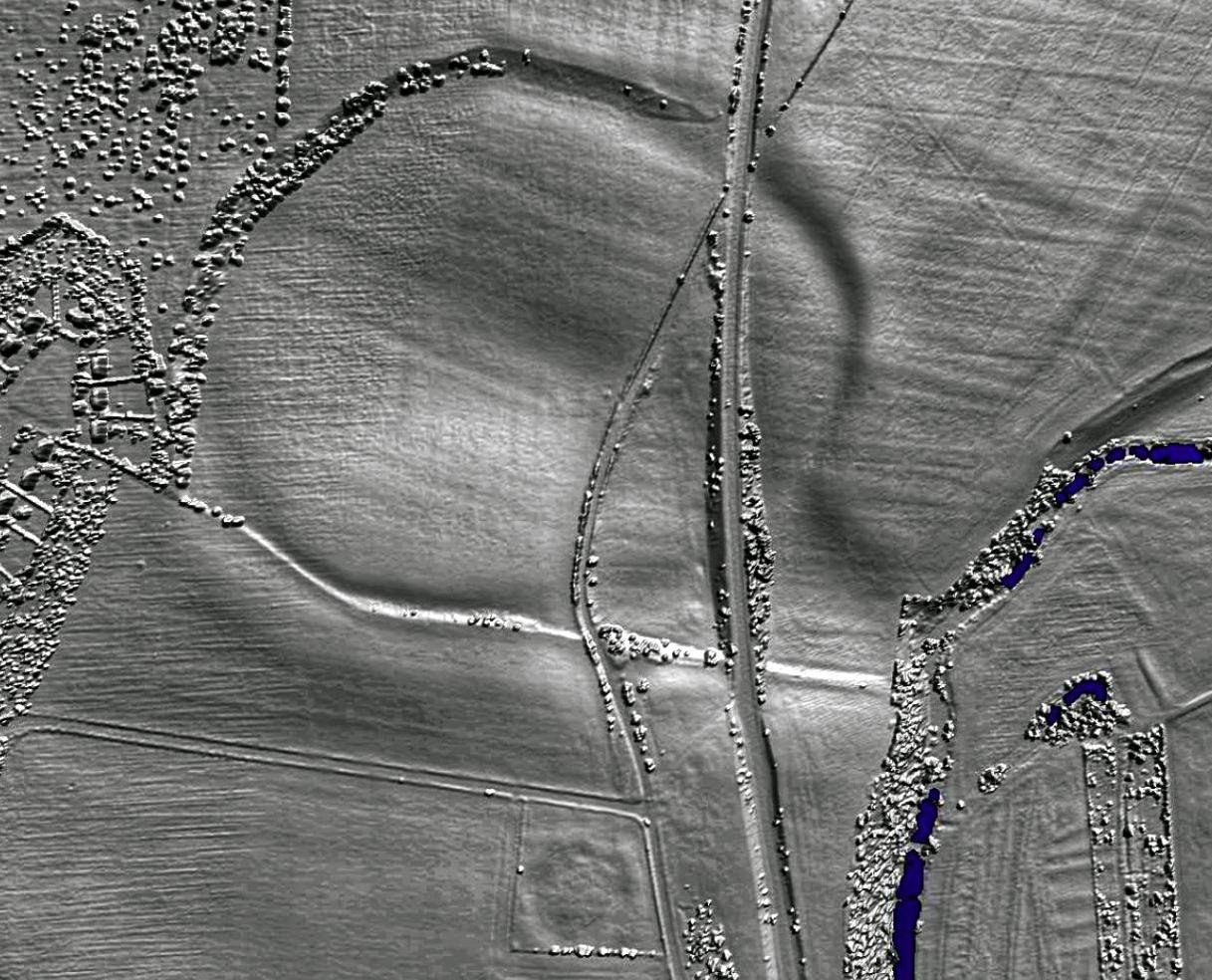
Durrington's Massive Pit Circle Reveals New Stonehenge Era Secrets
In the hallowed landscapes of Wiltshire, where the ancient stones of Stonehenge have stood sentinel for millennia, the chances of unearthing another monumental prehistoric site seemed almost infinitesimally small. Generations of dedicated archaeological work had meticulously mapped and studied this iconic region. Yet, defying all expectations, a groundbreaking
new Stonehenge discovery has dramatically reshaped our understanding of the Neolithic era: a colossal, two-kilometer-wide circuit of massive shafts around Durrington Walls.
This unparalleled find, revealed through advanced remote sensing technologies, represents one of the most significant archaeological breakthroughs in decades. Simultaneously, recent research has finally provided compelling evidence to resolve the age-old debate surrounding how Stonehenge's mysterious bluestones arrived on Salisbury Plain, further enriching our tapestry of knowledge about Britain's prehistoric past. These discoveries don't just add new dots to the map; they redraw entire sections, offering fresh insights into the intricate lives, beliefs, and remarkable engineering prowess of our ancestors.
Unearthing Durrington's Colossal Pit Circle: A Game Changer for Prehistoric Archaeology
For years, archaeologists have known of Durrington Walls, one of Britain's largest Neolithic monuments. This impressive henge, spanning 500 meters across with its distinctive banks and ditches, was constructed over 4,500 years ago by early farming communities, coinciding with the period when Stonehenge was achieving its final, distinctive form. Beneath Durrington Walls, evidence also suggests the presence of what might have been one of North West Europe's largest Neolithic villages, hinting at a bustling, vibrant prehistoric hub.
However, the true scale of human activity and ritual in the area has only recently come into sharper focus thanks to a quiet revolution in archaeological methodology. Over the past decade, enhanced remote sensing technologies – including sophisticated magnetometry and ground-penetrating radar – have allowed researchers to peer beneath the surface of approximately 18 square kilometers of the Stonehenge landscape without disturbing the fragile ground. It was through this non-invasive approach that the first subtle clues to the new discovery emerged.
Initially, a small number of peculiar circular anomalies were recorded in magnetometry data south of Durrington Walls. These 'splodges' were initially interpreted as shallower features, perhaps of lesser significance. Yet, as mapping work progressed, an extraordinary pattern began to emerge. These seemingly isolated features were, in fact, interconnected, forming part of a single, continuous, massive circuit surrounding the Durrington Walls henge.
Detailed investigation, including targeted drilling for underground samples, confirmed the astonishing truth: these anomalies were not shallow features but massive pits, some reaching over five meters in depth and ten meters in diameter, with near-vertical sides. Within these pits, archaeologists found worked flint and bone, and crucial radiocarbon dating placed their construction firmly in the same period as the Durrington Walls henge itself.
The sheer number of these monumental pits and the staggering scale of the Durrington circuit – stretching over two kilometers in diameter and enclosing an internal area of at least three square kilometers – is unparalleled anywhere else in the UK. This vast arrangement of pits strongly suggests they defined and bounded an immensely important, sacred space. While Stonehenge is often associated with the realm of the ancestors and the dead, Durrington Walls is widely believed to have been a place for the living, a site of feasting, communal gathering, and celebration. This
new Stonehenge discovery of an outer pit circle at Durrington now suggests a similar scale of designated special area, mirroring the territorial significance of Stonehenge but perhaps for different ritual purposes.
A Deliberate Design: Incorporating Ancient History into the New Stonehenge Discovery
One of the most profound insights offered by this colossal pit circle lies in the apparent intentionality of its layout. The builders of this impressive monument went to great lengths to incorporate an even older structure into their design: the Larkhill Causewayed Enclosure. Built more than a thousand years before the Durrington Walls henge, these ditched enclosures were among the very first large communal constructions in Britain, holding immense significance for early farming communities.
The decision to deliberately appropriate and integrate this ancient monument into the circuit of the Durrington pit circle speaks volumes about the mindset of the people who engineered these massive structures. It was not a random placement but a conscious, symbolic statement. By encompassing the Larkhill enclosure, the Neolithic builders were perhaps not only acknowledging the power and history of their ancestors but also actively integrating it into a new, grander ceremonial landscape. This act could have served to legitimise the new monument, drawing on the sanctity of the old, or perhaps to symbolically bind past and present within a continuous ritual space.
Furthermore, the pits appear to have been laid out with remarkable precision, forming a notional circle such that they were all roughly the same walking distance from a central point within the henge. This suggests an astonishing level of planning, coordination, and an intrinsic understanding of geometry or spatial relationships among these prehistoric communities. It highlights a sophisticated approach to landscape management and ritual design that pushes the boundaries of our previous assumptions about Neolithic capabilities.
Resolving the Bluestone Mystery: Human Endeavor Over Glacial Drift
While the Durrington pit circle captures the imagination with its sheer scale and mystery, another significant archaeological development has recently brought clarity to a different long-standing Stonehenge enigma. For decades, scholars and enthusiasts have debated the origins of Stonehenge's iconic bluestones – the smaller stones at the site, distinct from the massive sarsens. The central question revolved around how these stones, geologically identified as originating from the Preseli Hills in Wales, made their arduous journey to Salisbury Plain. Were they painstakingly transported by human effort, or did glaciers carry them east during an ancient ice age?
In a crucial 2024 paper published in *Communications Earth & Environment*, researchers from Curtin University have presented compelling new evidence that strongly discounts the likelihood of glacial transport. Their work provides robust data to support the hypothesis that the bluestones were indeed carried to the site by humans. This
new Stonehenge discovery effectively resolves a major debate that has fueled academic discussion for generations.
Further adding to this resolution, the Curtin University team determined that Stonehenge's enigmatic Altar Stone, a prominent feature at the heart of the monument, was transported from Scotland. This discovery not only specifies a previously unknown origin for one of the monument's key components but also expands our understanding of the incredible distances over which Neolithic peoples were capable of moving monumental stones. It underscores their profound determination, logistical capabilities, and perhaps the far-reaching ritual or symbolic connections across ancient Britain. These findings paint a picture of extraordinary human endeavor, challenging any notion of primitive societies and instead revealing sophisticated communities driven by powerful beliefs and a remarkable capacity for engineering.
What These Discoveries Mean for Our Understanding of Stonehenge and Neolithic Britain
These twin discoveries – the colossal pit circle at Durrington Walls and the definitive evidence for human bluestone transport – collectively represent a profound leap forward in our understanding of Neolithic Britain. They don't just offer isolated facts; they weave together a more intricate and fascinating narrative of our ancient past.
1. **Challenging Previous Assumptions:** The Durrington pit circle dramatically expands the known scale and complexity of ritual landscapes around Stonehenge. It shows that major archaeological monuments can still be found even in heavily studied areas, thanks to technological advancements.
2. **Sophistication of Neolithic Societies:** The precision in laying out the Durrington pits and the sheer effort involved in human-transporting bluestones over vast distances highlight an advanced level of planning, social organization, and engineering acumen among Neolithic communities. They possessed deep knowledge of their landscape and impressive logistical capabilities.
3. **Interconnected Ritual Landscapes:** The new findings emphasize the interconnectedness of sites like Stonehenge and Durrington Walls. They were not isolated structures but part of a larger, carefully managed sacred landscape, each serving distinct yet complementary roles within the belief systems of the time – perhaps one for the living, one for the dead, but both equally monumental.
4. **The Power of Technology:** These discoveries underscore the critical role of modern remote sensing technologies in archaeology. They allow for non-invasive exploration of vast areas, revealing secrets that traditional excavation methods might never uncover or would take decades to identify. This approach is not only efficient but also preserves delicate archaeological contexts for future study.
5. **Tips for Appreciating Archaeology:** For those fascinated by these revelations, consider visiting these incredible sites. While the Durrington pit circle is largely unseen beneath the surface, the context of Durrington Walls and Stonehenge itself will offer a tangible connection to these ancient mysteries. Support archaeological trusts and engage with ongoing research; these discoveries are a testament to tireless work and innovation.
Conclusion
The Durrington pit circle and the bluestone transport resolution stand as monumental achievements in archaeological research, offering fresh and profound insights into the mysterious world of Neolithic Britain. The scale of the Durrington circuit redefines our understanding of the ceremonial landscape around Stonehenge, revealing a society capable of truly monumental feats of planning and construction. Simultaneously, the confirmation of human bluestone transport paints a vivid picture of the sheer determination and ingenuity of our ancient ancestors. These "new Stonehenge discoveries" not only fill crucial gaps in our knowledge but also open exciting new avenues for research, promising even deeper revelations as archaeologists continue to peel back the layers of time from this extraordinary landscape. The story of Stonehenge, it seems, is far from fully told.