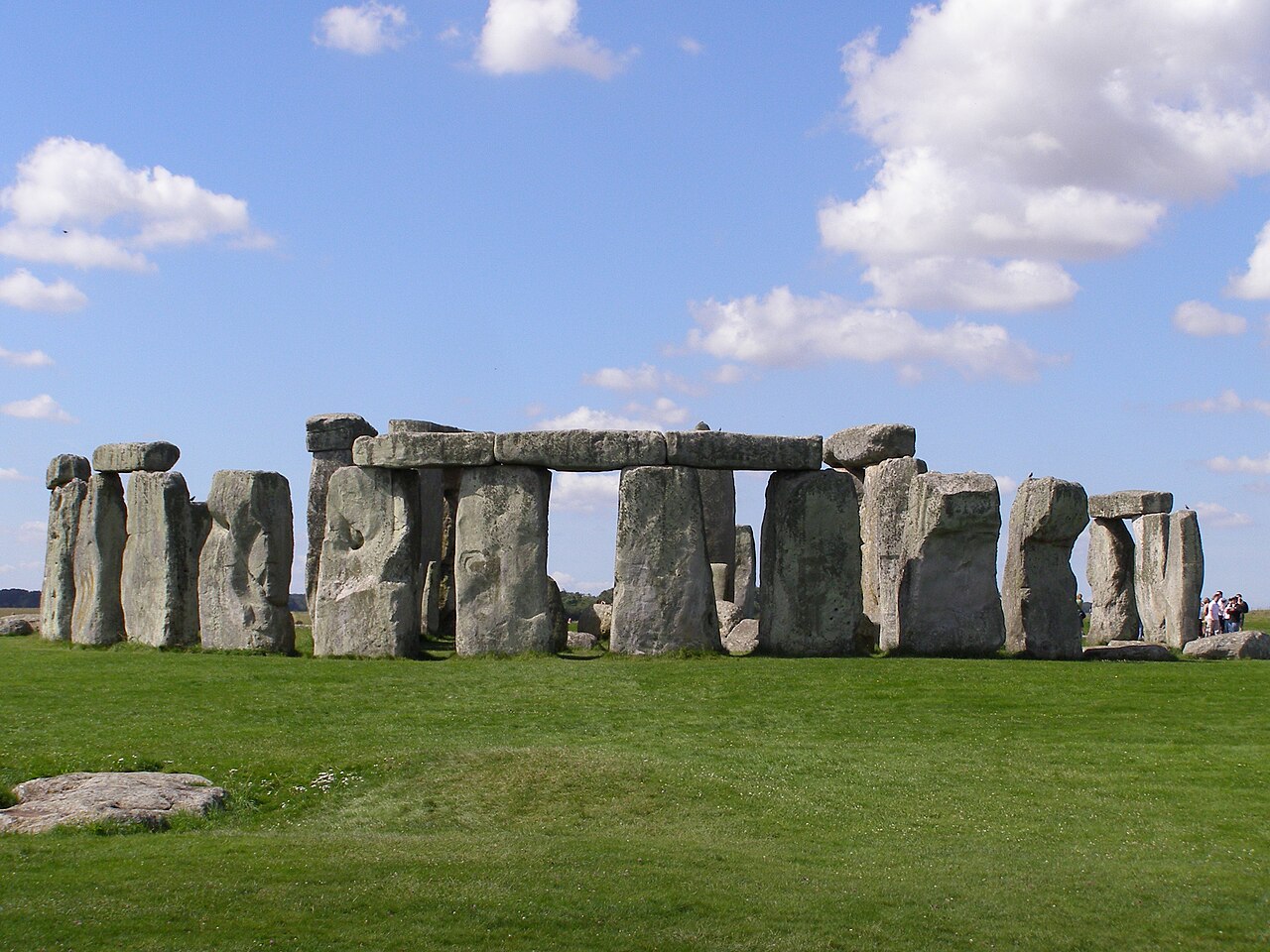
Stonehenge Bluestone Transport Mystery Finally Solved: A New Era of Discovery
For millennia, Stonehenge has stood as an enduring enigma, its monumental stones silently guarding secrets of ancient craftsmanship, purpose, and the sheer audacity of its builders. Among its most persistent mysteries has been the origin and transportation of its iconic bluestones, smaller but equally significant stones brought from distant lands. After generations of scholarly debate, groundbreaking new Stonehenge discovery and research are finally providing definitive answers, not only unraveling the bluestone conundrum but also revealing an astonishing, previously unknown monumental structure in its immediate vicinity.
These dual revelations are reshaping our understanding of Neolithic Britain, painting a picture of incredibly sophisticated societies with complex rituals, advanced engineering capabilities, and a profound connection to their landscape. The age-old question of whether human ingenuity or natural forces moved Stonehenge's bluestones can now be put to rest, while a massive, uncharted ancient monument emerges from the shadows of remote sensing technology, offering fresh insights into the world that built Stonehenge.
Unraveling the Bluestone Transport Enigma: Humans, Not Glaciers
The journey of Stonehenge's bluestones has long fueled one of archaeology's most heated debates. These distinctive stones, ranging from a few hundred kilograms to several tonnes, are geologically traceable to the Preseli Hills in West Wales, a staggering distance of over 200 kilometers. For decades, the primary theories have revolved around two possibilities: either prehistoric humans painstakingly transported them across land and water, or they were carried eastward by colossal glaciers during the Ice Age, conveniently depositing them closer to Salisbury Plain.
The "glacial theory" held significant appeal for some, offering a seemingly less labor-intensive explanation for the presence of such heavy stones so far from their source. However, recent, rigorous work, notably by Curtin University researchers and published in _Communications Earth & Environment_, has now decisively tipped the scales. Their detailed geological and geomorphological analysis found no compelling evidence to support the widespread glacial deposition of these specific bluestone types in the Stonehenge area. Instead, the evidence overwhelmingly points to one incredible conclusion: Neolithic people were responsible for their colossal journey.
This new Stonehenge discovery isn't just a scientific detail; it's a testament to the extraordinary capabilities and determination of our ancient ancestors. Imagine the planning, coordination, and sheer physical effort required to move hundreds of these stones without the aid of modern machinery. This would have involved:
- Selecting the appropriate stones from distant quarries.
- Developing innovative techniques for dislodging and shaping them.
- Constructing sledges, rollers, and potentially rafts for river and sea transport.
- Organizing large workforces, likely across multiple communities, for what would have been a monumental, multi-generational project.
The successful human transportation of the bluestones implies a highly organized society with sophisticated engineering knowledge, a shared vision, and possibly a powerful spiritual motivation driving such an immense undertaking.
The Altar Stone's Epic Journey from Scotland: A Unique Origin
Adding another layer of complexity and wonder to the bluestone saga is the unique case of the Altar Stone. This single, massive sandstone slab, weighing approximately six tonnes, stands apart from the other bluestones in its geological composition and, as a 2024 Curtin University study revealed, its origin. The researchers determined that the Altar Stone was transported not from Wales, but from Scotland.
This finding is nothing short of astounding. If the journey from Wales was a feat, the transportation of the Altar Stone from Scotland represents an even more incredible undertaking. It suggests a possible connection or trade network spanning vast distances across prehistoric Britain, highlighting the interconnectedness of these ancient cultures. The Altar Stone's singular presence and monumental size within Stonehenge indicate its profound significance, perhaps central to the site's ritualistic purpose. Its arrival from such a distant, distinct location likely imbued it with immense symbolic power, potentially linking the sacred landscape of Salisbury Plain to revered northern territories.
This specialized journey for a unique stone further underscores that the movement of Stonehenge's components was a deliberate, culturally driven act, rather than a mere accident of geology. It speaks volumes about the value placed on these stones and the lengths to which people would go to integrate them into their sacred architecture.
A Monumental New Discovery: The Durrington Pit Circle
While the bluestone mystery was being unraveled, another extraordinary new Stonehenge discovery was simultaneously emerging from the landscape just a few miles northeast of the famous stone circle, near the Durrington Walls henge. For generations, archaeologists have meticulously surveyed the Stonehenge landscape, making the chances of stumbling upon another major prehistoric monument seem incredibly remote. And yet, an Anglo-Austrian team, utilizing advanced remote sensing technologies, has done just that: they discovered a massive, 2km-wide circuit of colossal pits surrounding Durrington Walls.
Durrington Walls itself is one of Britain's largest Neolithic monuments, a henge constructed over 4,500 years ago, contemporaneous with Stonehenge's final form. Beneath it lies what may have been one of North-West Europe's largest Neolithic villages. The story of this new discovery began quietly over a decade ago with "peculiar circular splodges" in magnetometry data south of Durrington. These anomalies, initially dismissed as shallower features, were later revealed through detailed mapping and drilling to be interconnected, forming a single, massive circuit. The pits themselves are immense, with near-vertical sides, containing worked flint and bone, and radiocarbon-dated to the same era as the Durrington Walls henge.
The sheer scale of this pit circle is unparalleled in the UK. The internal area of the ring spans approximately three square kilometers. This arrangement strongly suggests that the pits bounded an incredibly important, sacred space, much like the "Stonehenge Cursus" defines an outer territory for Stonehenge itself. This revolutionary find is shedding light on the broader ritualistic landscape around Stonehenge and has been detailed further in articles like New 2km Neolithic Pit Circle Discovered Near Stonehenge.
Peering into the Neolithic Mindset: Purpose and Symbolism
The Durrington pit circle offers profound insights into the beliefs, planning, and cosmic understanding of the people who engineered these massive structures. Traditionally, archaeologists have contrasted Stonehenge, often associated with ancestors, death, and winter solstice rituals, with Durrington Walls, believed to be a place for the living, feasting, and summer solstice celebrations. This new Stonehenge discovery suggests a more complex, interwoven relationship, indicating that Durrington, too, possessed a highly specialized outer area of immense significance, mirroring the territorial definition seen at Stonehenge.
Perhaps most fascinating is the apparent intentionality behind the pit circle's layout. The pits seem to have been strategically positioned to incorporate a much earlier monument: the Coneybury henge. Built over a thousand years before Durrington Walls, Coneybury was one of Britain's first large communal constructions. The deliberate decision to appropriate this ancient structure into the new, massive pit circuit speaks volumes about the Neolithic people's reverence for their past and their desire to integrate ancestral sites into contemporary sacred landscapes. It wasn't just about building; it was about connecting, remembering, and layering meaning onto the land.
Furthermore, the pits appear to have been laid out in a notional circle where they were all the same walking distance from a central point. This precise, almost mathematical planning underscores a sophisticated understanding of space and geometry, possibly tied to astronomical observations or ritualistic processions. It suggests a society capable of complex long-term planning, collective labor mobilization, and a deep engagement with their environment. The revelations about Durrington's monumental pit circle are profoundly altering our perspective on the entire Stonehenge landscape, as explored in Durrington's Massive Pit Circle Reveals New Stonehenge Era Secrets.
Conclusion: A Landscape Still Revealing Its Secrets
These recent breakthroughs, from solving the bluestone transport mystery to the monumental new Stonehenge discovery of the Durrington pit circle, represent a thrilling chapter in our quest to understand one of the world's most iconic prehistoric sites. They highlight the power of modern archaeological techniques, particularly remote sensing, to unveil hidden layers of our past even in areas thought to be exhaustively studied. The findings confirm the extraordinary capabilities of Neolithic peoples – their engineering prowess, their vast organizational skills, and their deep, complex spiritual connection to the land and their ancestors. Stonehenge and its surrounding landscape continue to be a testament to human ingenuity and enduring wonder, reminding us that even the most familiar ancient sites still hold incredible secrets waiting to be discovered.